
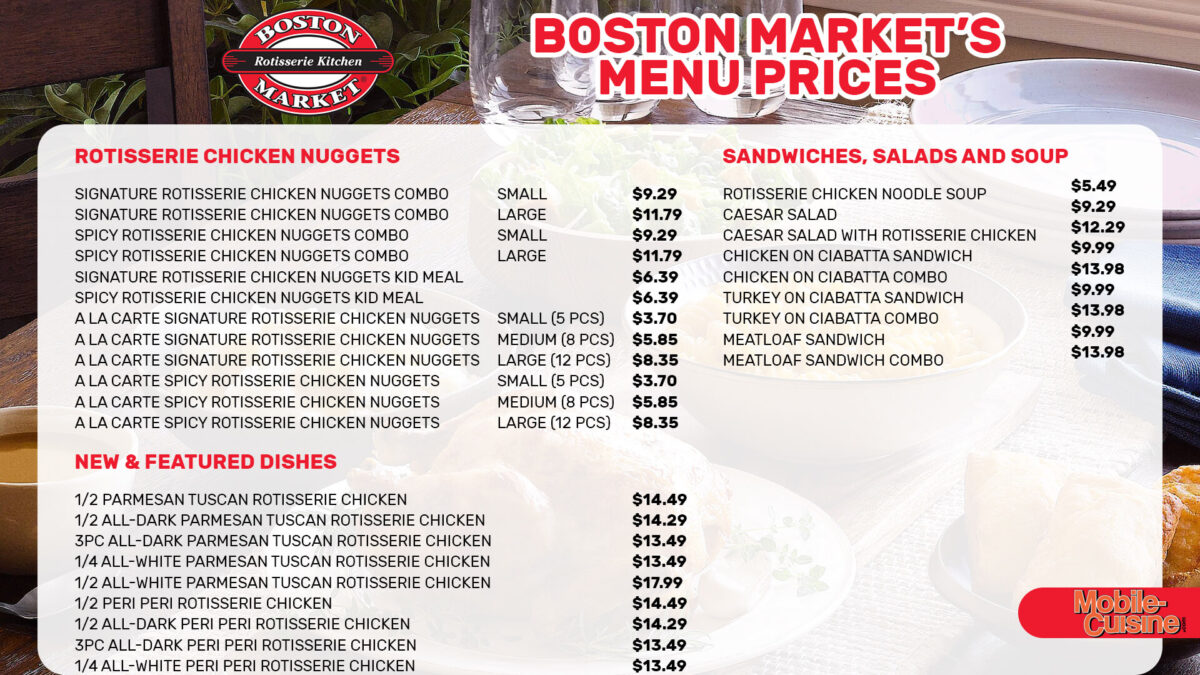
The recent plans for the boston market restaurant menu represent a bold, yet seemingly unattainable, culinary pivot. Announced in January, the company detailed an aggressive menu expansion strategy. This initiative aimed to introduce new global cuisine items every six weeks. However, an immediate disconnect emerged between the corporate vision and the operational challenges on the ground. This comprehensive report investigates the proposed menu changes, the on-the-ground reality of the menu’s availability, and the profound supplier disputes and unit count decline that overshadow the brand’s future. The ambitious introduction of chicken tikka and biryani has become a central focus of the chain’s current instability.
Unpacking the Proposed Menu Transformation
In January, Boston Market revealed its “Boston Market Connect” expansion program. This announcement was coupled with a significant shift in its culinary strategy. The company committed to launching a new international menu item every six weeks. This rapid rotation of global cuisine was a complete departure from the brand’s traditional rotisserie chicken focus.
The Global Cuisine Strategy and Its Genesis
The immediate items slated for launch were chicken tikka and biryani. These dishes, staples of Indian culinary culture, were a deliberate nod to the heritage of Boston Market’s President, Jay Pandya. The strategy signaled an attempt to revitalize the menu through exotic, culturally resonant offerings. This commitment was meant to redefine the public perception of the struggling fast-casual chain.
However, the company never provided a clear timeline for these specific menu launches. This vagueness immediately raised questions about the feasibility of the ambitious rollout. Introducing complex, new international dishes requires robust supply chains. The strategy’s success was instantly contingent on a level of operational stability the company simply did not possess.
The Disconnect Between Corporate Vision and Reality
A significant investigation four weeks after the menu announcement found zero evidence of the new items. Researchers contacted 17 Boston Market locations across several mid-Atlantic states. These stores, still listed as operational on the company website, confirmed that neither chicken tikka nor biryani was available. This proved the new menu items were purely theoretical.
The employees who answered the phones at these few locations were not aware of the promised six-week menu rotation. This lack of internal communication highlighted a critical failure in execution. The corporate strategy for culinary innovation had not been successfully translated to the actual store level. This suggested a fundamental breakdown in internal management and logistics.
Supply Chain Collapse and Operational Instability
The logistical hurdles associated with a global menu rollout are immense even for healthy chains. For Boston Market, these challenges were compounded by severe, well-documented financial distress. This distress directly impacted the chain’s ability to procure the necessary ingredients. The lack of a stable supply chain is the single most critical factor explaining the menu’s failure to materialize.
The Fallout from the US Foods Lawsuit
The most public signal of financial instability came from the US Foods lawsuit. A judge granted the supplier nearly $12 million in a default settlement against Boston Market. The court determined that the restaurant chain had dealt with the supplier in bad faith. This significant legal ruling confirms a deep crisis in the brand’s financial relationships.
The failure to pay a primary vendor severely jeopardizes a restaurant’s operational capacity. Without a reliable supply partner, sourcing becomes haphazard and unreliable. A chain cannot maintain quality or consistency when faced with such massive supply interruptions. The instability makes complex menu additions entirely unsustainable.
Operators Sourcing Ingredients at Retail
Following the dramatic supplier conflicts, reports surfaced of extreme measures taken by store operators. Some Boston Market managers were reportedly forced to shop at local grocery stores for key ingredients. This tactic is a clear indicator of a complete supply chain breakdown. It is a costly, time-consuming, and operationally unsound practice for any multi-unit restaurant chain.
The inability to leverage centralized purchasing demonstrates the depth of the crisis. It explains why a globally inspired menu requiring specialized ingredients could not be executed. No local grocery store can reliably stock the volume or specific components needed for dishes like biryani across multiple states. This ground-level reality starkly contrasts the ambitious corporate announcements.
The Digital Void: Failed Ordering and Store Closures
The chain’s operational problems are not limited to the back-of-house logistics. The customer-facing digital infrastructure also showed significant signs of collapse. The ability to view the boston market restaurant menu and place orders online proved largely impossible for customers. This failure adds another layer to the brand’s decline in reliability.
The Online Ordering Blackout
As of early February, none of the 17 investigated locations offered online ordering. Restaurant Dive attempted to use the chain’s online ordering page, which is powered by Olo, with the zip codes of the listed stores. The attempt repeatedly failed to locate any of the restaurants for ordering. This suggests a systemic issue with the chain’s digital connectivity.
The company’s DoorDash page also lacked the chicken tikka and biryani menu items. A functioning restaurant chain must have cohesive digital and physical operations. The online ordering failure represents a lost revenue stream and a complete breakdown of customer convenience. It confirms that the store locator was inaccurately reflecting actual business capabilities.
The Reality of Store Disappearance
The number of physical locations is a telling metric of a chain’s health. In 2022, Boston Market operated approximately 300 restaurants. By early 2024, the company’s website listed only 79 locations nationwide. This dramatic unit count decline accelerated significantly following the 2020 acquisition by Jay Pandya. The rapid shrinkage underscores a severe lack of financial viability.
Of the 17 stores contacted, five appeared permanently closed. Seven others had phone numbers that only rang or yielded a busy signal. Only five stores, all in New Jersey, actually answered their phones. This small number suggests a mere handful of confirmed operating units remain. The New Jersey case is particularly revealing, dropping from 27 operating stores in August 2023 to just five confirmed locations in the investigation.
The E-E-A-T Assessment: Analyzing Reliability and Expertise
From an E-E-A-T perspective, Boston Market exhibits extremely low signals of Expertise, Authoritativeness, and Trustworthiness. A food service company’s primary expertise lies in reliably serving its menu. Its authority is based on its market presence and consistent quality. Trustworthiness is built on paying suppliers and treating employees fairly.
Low Expertise and Execution
The failed launch of the menu items demonstrates a critical lack of operational expertise. The company announced a complex initiative without the underlying infrastructure to support it. The use of grocery stores for ingredient sourcing further highlights a desperate and unsustainable business model. A competent, expert operation relies on negotiated contracts and a professional logistics network.
Authoritativeness and Transparency Issues
The company has lost significant authoritativeness within the industry. The public court ruling against them for bad faith dealings with a major supplier damages their standing. Furthermore, the company did not respond to requests for comment regarding the menu rollout or the operational unit count. This lack of transparency undermines any claim to industry leadership or reliable information.
Eroded Trustworthiness
The most significant red flag is the issue of unpaid wages in New Jersey. In August 2023, the New Jersey Department of Labor issued a temporary stop work order at 27 locations over these unpaid wages. This, combined with the US Foods lawsuit, completely erodes public and commercial trust in the organization. Customers and partners cannot trust a business that cannot meet its basic financial and legal obligations.
Conclusion: Operational Stability Precedes Culinary Innovation
The ambitious pursuit of a revamped boston market restaurant menu is a narrative of corporate aspiration clashing with dire operational reality. The plan for an evolving global menu expansion, beginning with exotic items like chicken tikka and biryani, has proven entirely theoretical. Crippling operational challenges, including a monumental supplier dispute and a rapid unit count decline, have rendered the culinary vision moot. For the chain to have any chance of recovery, the necessary focus must shift entirely from menu innovation to establishing basic financial and logistical stability.
Last Updated on November 30, 2025 by Alex Cesaria

Alex Cesaria is the creative force behind Nomad Girl, an all-day café and ristorante with a signature Milanese flair located in the heart of Nomad, New York City. With years of experience in the hospitality industry, Alex blends refined Italian sensibilities with New York’s energetic dining culture to create a place that feels both elegant and welcoming.